
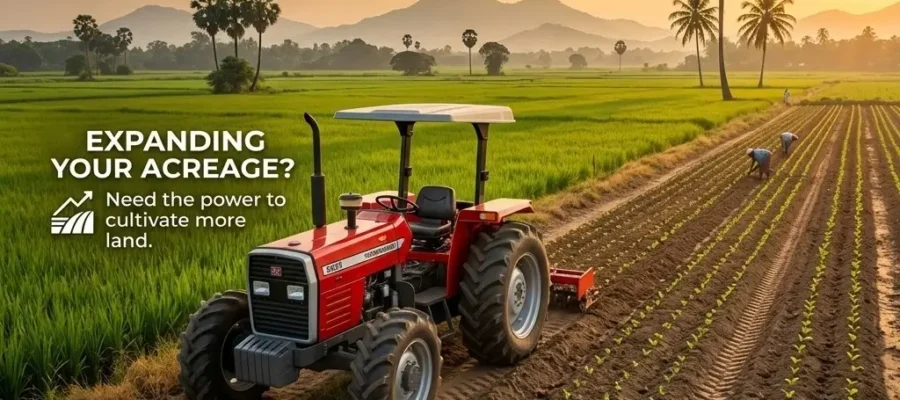
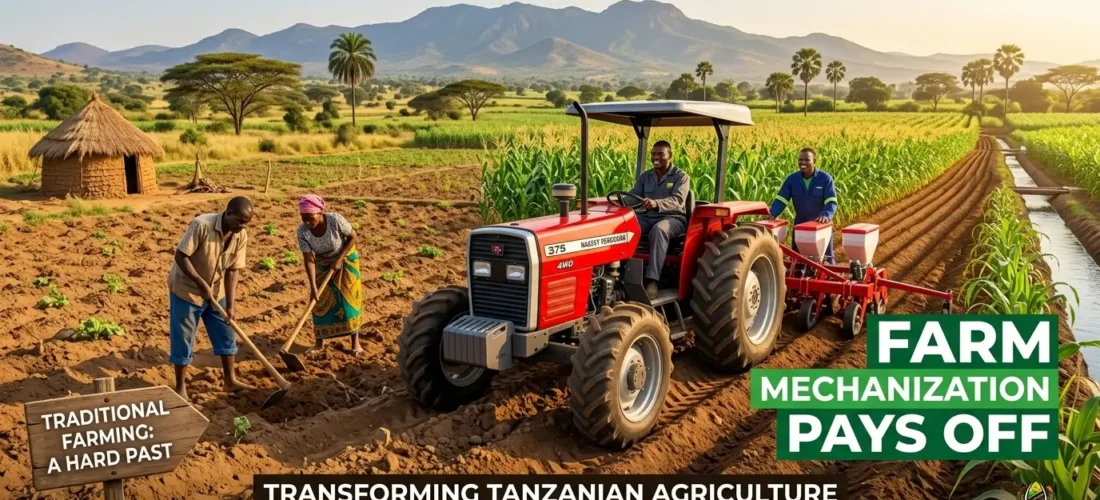
Mechanization helps Tanzanian farms cultivate more land, plant and harvest faster, and produce higher-quality crops than manual labour allows. According to Massey Ferguson Tanzania, farming employs over 65% of the country’s workforce, yet many farmers still rely on hand hoes and animal-drawn tools. The government’s Agricultural Mechanization Strategy 2026–2036 aims to change that by moving farmers from manual labour toward mechanised production.
Why does mechanization matter for Tanzanian farms?
A tractor can complete fieldwork in hours that would take days by hand, according to Massey Ferguson Tanzania. This speed matters most during short planting and harvesting windows in regions like Iringa, Dodoma, and Morogoro, where delays can mean lost yield. Research by Kirui (2019), covering eleven African countries, found that mechanization significantly increases the amount of cropland farmers are able to cultivate.
What challenges do Tanzanian farmers face when mechanizing?
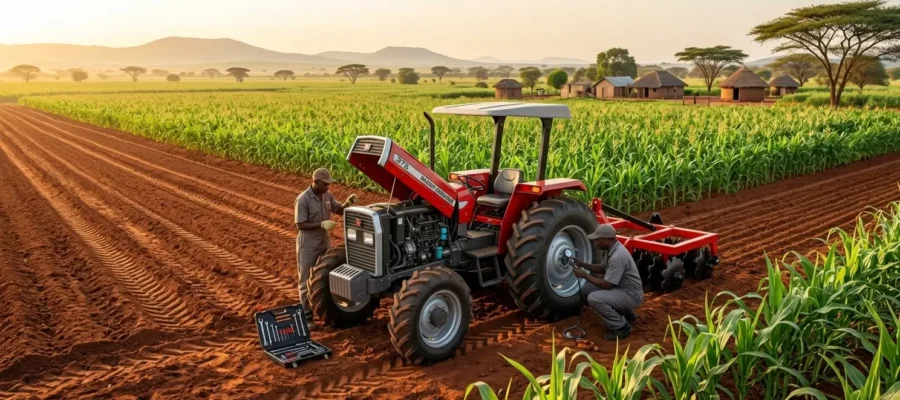
The main barriers are high upfront costs, limited access to service and spare parts, and a lack of training, as outlined in Tanzania’s mechanization strategy. Varied terrain — including rocky ground and heavy clay soils — can also make certain implements unsuitable without the right tractor power. The national strategy addresses these gaps through pillars covering financing access, training, and stronger local service and spare-part networks.
Which tractor suits which type of Tanzanian farm?
The right choice depends on farm size, crops grown, and the implements needed. Smaller plots are typically suited to the MF 240 (50hp), while larger operations benefit from the higher-powered MF 385 (85hp). Heavier tasks like disc ploughing generally require 85hp or more, so farmers running multiple implements should size their tractor accordingly. Massey Ferguson Tanzania’s tractor lineup and implements range span these needs, from the MF 240 up to the MF 375 and MF 385.
Should farmers buy a tractor or use a shared equipment model?
Ownership suits farmers with consistently large acreage who can justify the investment, while shared models work best for smallholders who need occasional access. Cooperatives, rental hubs, and contractor services let several farmers share one tractor, typically lowering the cost per acre compared with manual labour. Farmers who do invest in their own tractor can also earn extra income by offering ploughing or transport services to neighbours.
How can farmers finance mechanization in Tanzania?
Flexible financing options are part of the national mechanization strategy, designed to make tractor ownership more accessible to smallholders. Farmers can learn more in Massey Ferguson Tanzania’s guide on how to finance a tractor in Tanzania.
Frequently Asked Questions
Are tractors manufactured in Tanzania?
No. Tractors are supplied via distributors and shipped to the Port of Dar es Salaam, with genuine spare parts and after-sales support available locally.
What price range should Tanzanian farmers expect for a tractor?
Prices generally start around USD 10,000 for smaller models and can exceed USD 60,000 for large, high-horsepower tractors, according to Massey Ferguson Tanzania’s site FAQ.
Can mechanization create new opportunities beyond farming?
Yes. Offering ploughing or transport services to neighbouring farms can generate extra income, turning farming into a broader business opportunity for young Tanzanians.
Related Posts

Post a Comment