

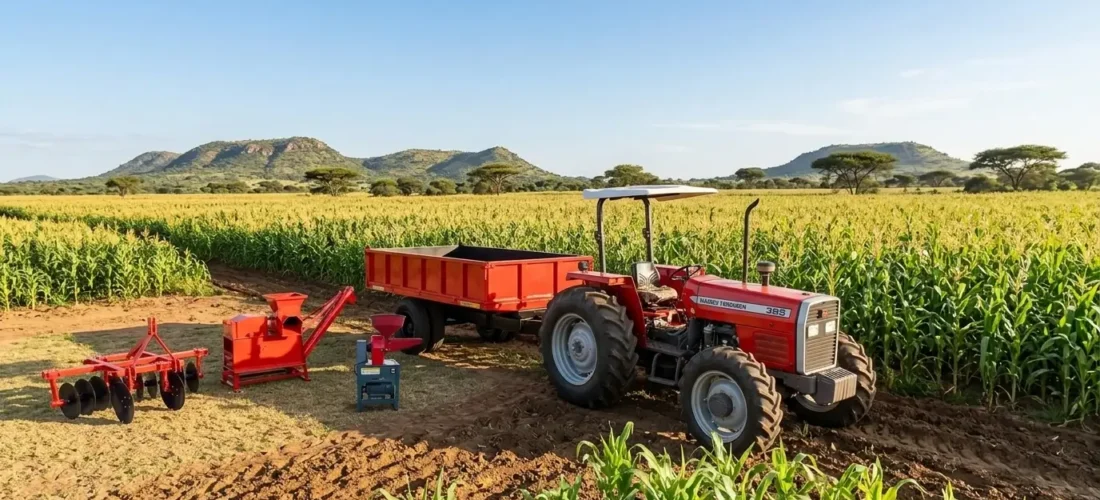
Shared equipment models allow smallholder farmers in Tanzanian villages to pool resources and access modern machinery, such as tractors and implements, that they could not afford individually. By sharing costs, farming communities raise productivity, lower expenses and reduce reliance on manual labour, all of which help transform rural livelihoods.
For many villages in Tanzania, the shift from ox-ploughing to mechanised farming has been slowed by one barrier: the high cost of owning a tractor. Shared equipment models remove this barrier, making mechanisation practical even for the smallest farms.
What is a shared equipment model in farming?
A shared equipment model is an arrangement where a group of farmers, a cooperative, or a village collectively owns, rents, or shares access to agricultural machinery. Instead of each farmer buying a tractor, the community shares one, splitting both the cost and the benefits.
Common approaches include:
- Cooperative ownership: A farming cooperative purchases a tractor and implements, with members contributing to the cost and maintenance.
- Equipment rental hubs: A central village hub owns machinery and hires it out to local farmers by the hour or by the acre.
- Contractor services: A single owner offers ploughing, harvesting, or transport services to neighbouring farms for a fee.
Why shared equipment matters for Tanzanian villages
Shared equipment matters because it makes modern mechanised farming affordable and accessible. In Tanzania, where many families farm small plots, individual tractor ownership is often out of reach. Sharing spreads the investment across many households.
Key benefits include:
- Lower costs per farmer: Splitting the price of a tractor and implements makes machinery affordable for families who could never buy one alone.
- Higher yields: Reliable, well-maintained equipment such as Massey Ferguson tractors prepares land, sows, and harvests faster, boosting the total crop yield from village land.
- Less manual labour: Machines handle demanding tasks like ploughing and transporting heavy loads, freeing people for other productive work.
- Better use of implements: A shared tractor can be paired with a range of farm implements, from disc ploughs to trailers, maximising value from a single machine.
How to set up a shared equipment model in a village
Setting up a shared equipment model starts with organising farmers and choosing the right machinery for local conditions. A clear plan keeps the arrangement fair and sustainable.
- Form a group or cooperative: Bring together farmers willing to share costs and responsibilities.
- Choose the right tractor: Match horsepower to farm size and crops. Popular reliable choices in Tanzania include the MF 240 (50hp) for smaller plots and the MF 385 (85hp) for larger operations.
- Agree on fair usage: Set transparent rules for scheduling, hire rates, and priority during busy planting and harvest seasons.
- Plan for maintenance: Budget for genuine spare parts, fuel, and regular servicing to keep the equipment running for years.
Why choose reliable, easy-to-maintain machinery
The success of any shared equipment model depends on dependable machinery. Massey Ferguson tractors are popular across Tanzania for their reliability, fuel efficiency, easy maintenance, and readily available spare parts, all of which are essential when a single machine serves an entire village.
Because one shared tractor works longer hours than a privately owned one, choosing durable equipment and following a proper maintenance schedule is vital to avoid downtime during critical farming periods.
Frequently Asked Questions
How many farmers can share one tractor in a village?
This depends on farm sizes and the machine’s horsepower, but a well-scheduled mid-range tractor such as an 85hp model can serve dozens of smallholder plots across a single planting season if usage is carefully planned.
Is a shared tractor cheaper than hiring manual labour?
In most cases, yes. Over a full season, a shared tractor typically reduces the cost per acre compared with manual labour, while completing land preparation and harvesting far more quickly.
What is the best tractor for a village shared equipment scheme in Tanzania?
The best choice depends on the size of the farmland and crops grown. Smaller villages often start with the MF 240 (50hp), while communities farming larger areas may prefer higher-horsepower models like the MF 375 (75hp) or MF 385 (85hp).
Related Posts

Post a Comment